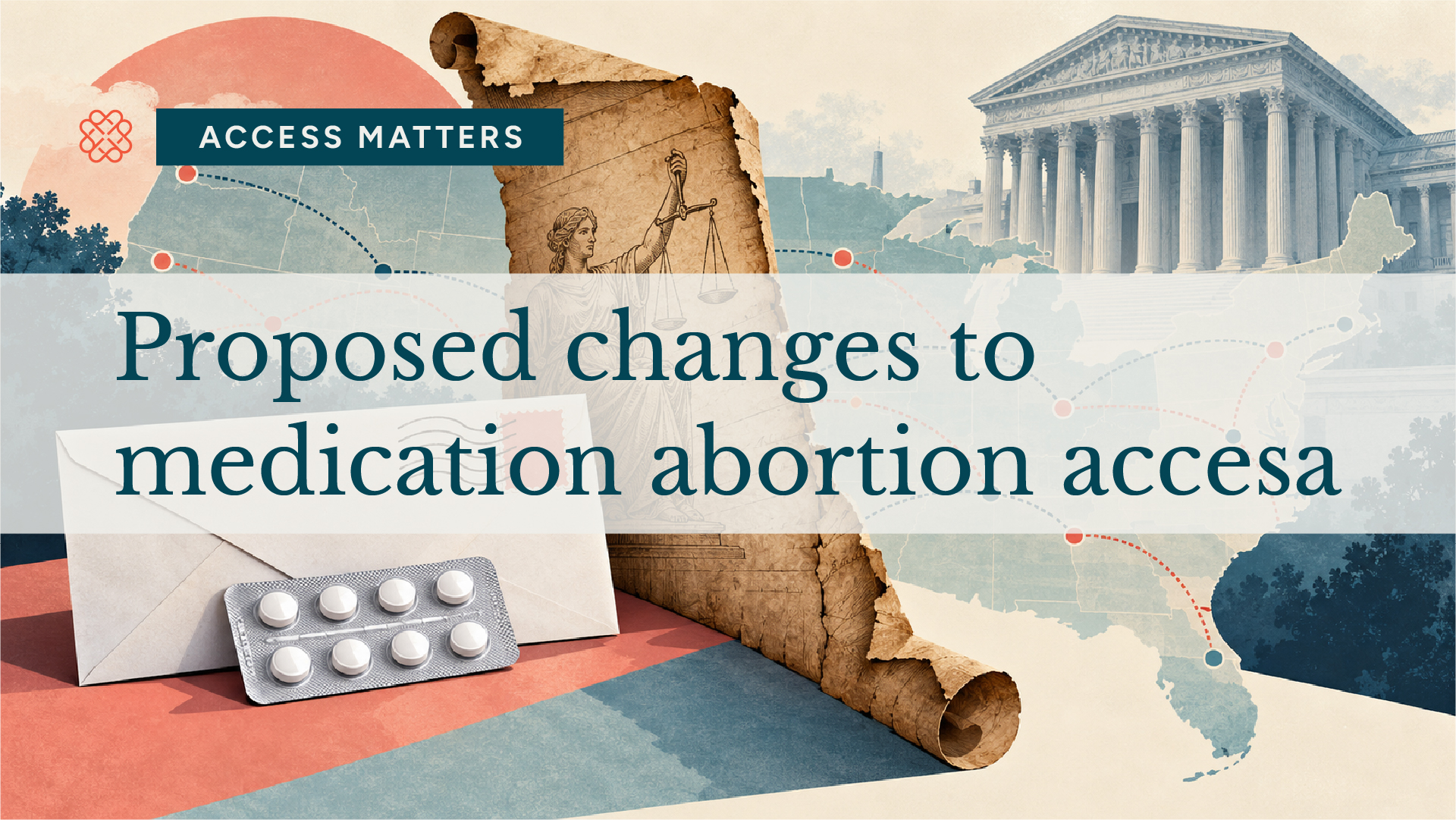

The Comstock Act was enacted more than 150 years ago. Now, some anti-abortion advocates are urging the federal government to use it to restrict abortion medication and supplies in the mail.
Such a change could reach much further than any single state abortion ban. Depending on how the law was interpreted and enforced, it could affect patients and providers nationwide including in states where abortion remains legal.
No new nationwide restriction has taken effect. However, recent statements and reporting have brought renewed attention to what the Comstock Act could mean for medication abortion.
What is the Comstock Act?
Congress passed the Comstock Act in 1873 as part of a broader effort to regulate materials the government considered obscene. Portions of the law remain in the U.S. Code today.
One provision, currently found in 18 U.S.C. § 1461, declares certain materials related to producing an abortion “nonmailable.”
Although the statutory language remains, federal courts and agencies have not always interpreted it literally. Later court decisions generally required evidence that a sender intended an item to be used unlawfully.
In 2022, the U.S. Department of Justice’s Office of Legal Counsel concluded that mailing mifepristone or misoprostol is not automatically prohibited. The opinion explained that these medications have lawful uses in every state and that a sender may not know how or where a recipient will use them.
That remains the federal government’s published legal interpretation.
Why is the law receiving attention now?
Some anti-abortion officials and legal organizations want the Department of Justice to withdraw or replace its 2022 interpretation.
During his 2026 confirmation process, Attorney General nominee Todd Blanche said the department would review the federal government’s interpretation of the law.
Recent reporting also suggests that administration officials and anti-abortion advocates have discussed possible action after the 2026 midterm elections. The White House denied that the reported meetings occurred, and the Department of Justice has not announced a new Comstock Act policy.
That distinction matters: discussion about a possible policy is not the same as a policy taking effect.
What could a broader interpretation do?
An expansive interpretation of the Comstock Act could potentially be used to target:
- Mifepristone and misoprostol sent through the U.S. mail.
- Packages transported by private carriers.
- Medical instruments and supplies used in abortion care.
- Pharmacies, manufacturers, distributors or providers involved in shipping those items.
- Information explaining how or where abortion medication can be obtained.
The exact reach would depend on the policy adopted, how federal officials attempted to enforce it and how courts interpreted the law.
Any major change would likely face immediate legal challenges.
Why abortion by mail matters
Medication abortion is a significant part of abortion care in the United States. Telehealth has become especially important for patients who live far from clinics, cannot afford to travel or live in states where abortion is banned or severely restricted.
The Society of Family Planning estimates that more than 300,000 clinician-provided abortions were provided through telehealth during 2025. By December 2025, telehealth accounted for 29% of abortions in the formal U.S. healthcare system.
Mail delivery makes much of that care possible.
In Iowa, new restrictions that took effect July 1, 2026, require abortion medication provided by an Iowa clinician to be prescribed in person and dispensed in a healthcare setting. Learn more in our 2026 legislative-session recap.
Some Iowans may still seek telehealth care from providers operating under another state’s shield law. A broad federal restriction on mailing abortion medication could threaten that option as well.
Is this the same as the shield-law lawsuits?
No. The issues are connected, but they involve different legal strategies.
The new shield-law lawsuits ask whether states with abortion bans can investigate or punish providers operating legally in states that protect telehealth abortion care.
The Comstock Act raises a federal question: whether the national government could use an old federal law to restrict abortion medication and supplies in the mail.
Read Why Abortion Shield Laws Matter to Iowans, for more information.
Has anything changed yet?
No nationwide Comstock Act restriction has taken effect.
The federal government’s published 2022 interpretation remains in place, and medication abortion continues to be available through the mail under current federal rules. Court cases, agency reviews and possible policy changes could affect access in the future, but no final change has been announced.
Because this issue is developing, it is important to distinguish between:
- What advocates are asking the government to do.
- What administration officials are reported to be considering.
- What the government has formally announced.
- What the courts have actually allowed.
We will continue monitoring these developments and updating this article as more information becomes available.
Sources
For more reproductive rights information and updates on Iowa healthcare access, visit our resources page or sign up for our newsletter.
Empower change.
Sign up for our newsletter and stay informed on reproductive healthcare issues in Iowa.