Two years ago, Iowa’s six-week abortion ban took effect, significantly changing when abortion care is available in the state.
Since then, Iowa’s broader reproductive and maternity healthcare landscape has continued to change. Labor and delivery units have closed. More communities are without local maternity care. Patients are traveling farther for services. And Iowans seeking abortion care are increasingly navigating the costs and logistics of leaving the state.
Each of these challenges has different and complex causes. But together, the numbers raise important questions about the future of healthcare access in Iowa.
Here’s what has changed and what it means for Iowans.
Iowa’s 6-Week Abortion Ban Changed Access to Care
Iowa’s law prohibits most abortions after cardiac activity can be detected, which can occur at approximately six weeks of pregnancy.
But pregnancy is measured from the first day of a person’s last menstrual period, not from conception. That means someone who is six weeks pregnant may have only known they were pregnant for a matter of days or weeks.
Abortions Provided in Iowa Dropped After the Ban
Before Iowa’s six-week abortion ban took effect, approximately 400 clinician-provided abortions occurred in Iowa each month during the first six months of 2024.
In August 2024, the first full month after the law took effect, that number fell to approximately 250.
But fewer abortions provided within Iowa does not necessarily mean fewer Iowans are seeking care.
More Iowans Are Traveling and Seeking Financial Assistance
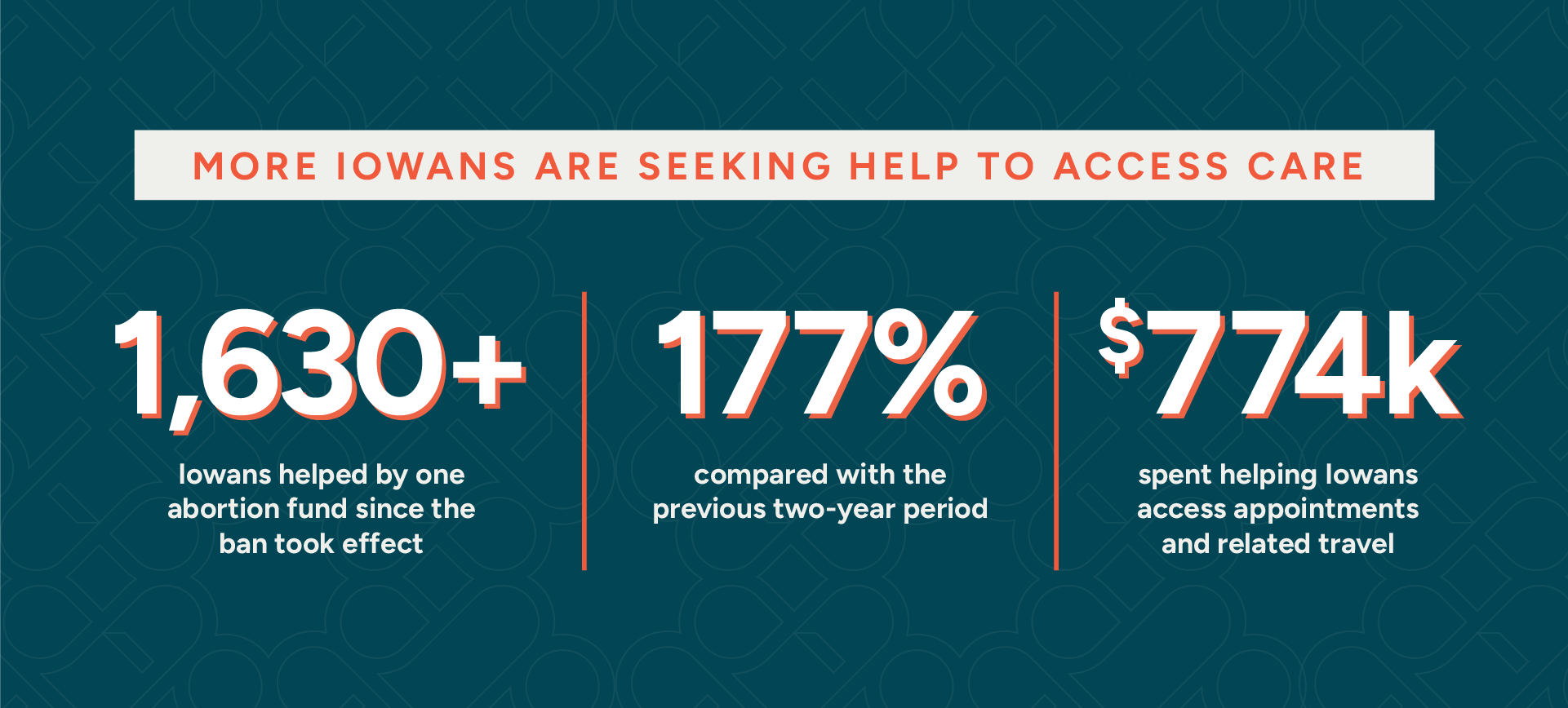
Since Iowa’s six-week abortion ban took effect, the Chicago Abortion Fund reports helping more than 1,630 Iowans access abortion care. A 177% increase compared with the previous two-year period.
The organization also reports spending more than $774,000 helping Iowans pay for appointments and related expenses, including transportation, hotels, childcare, and meals.
Iowa Is Losing Local Maternity Care
At the same time, communities across Iowa continue to lose labor and delivery services.
More than 40 Iowa hospitals have closed their birthing units since 2000, with rural communities experiencing many of the losses. As of January 2024, more than half of Iowa’s rural hospitals no longer delivered babies.
And the closures have continued.
Since August 2024, Iowa hospitals in Denison, Newton, Clinton, southeast Iowa, and Council Bluffs have closed, paused, or announced plans to end labor and delivery services. The latest announcement came from CHI Health Mercy Council Bluffs, which will end labor and delivery and Level II NICU services in August 2026.
The closures are driven by multiple factors, including staffing shortages, difficulties recruiting OB/GYNs, declining birth volumes, and financial pressures facing hospitals.
But regardless of the reason, the result for patients is the same:
Fewer places to receive care. Longer distances to travel.


1 in 3 Iowa Counties Is a Maternity Care Desert
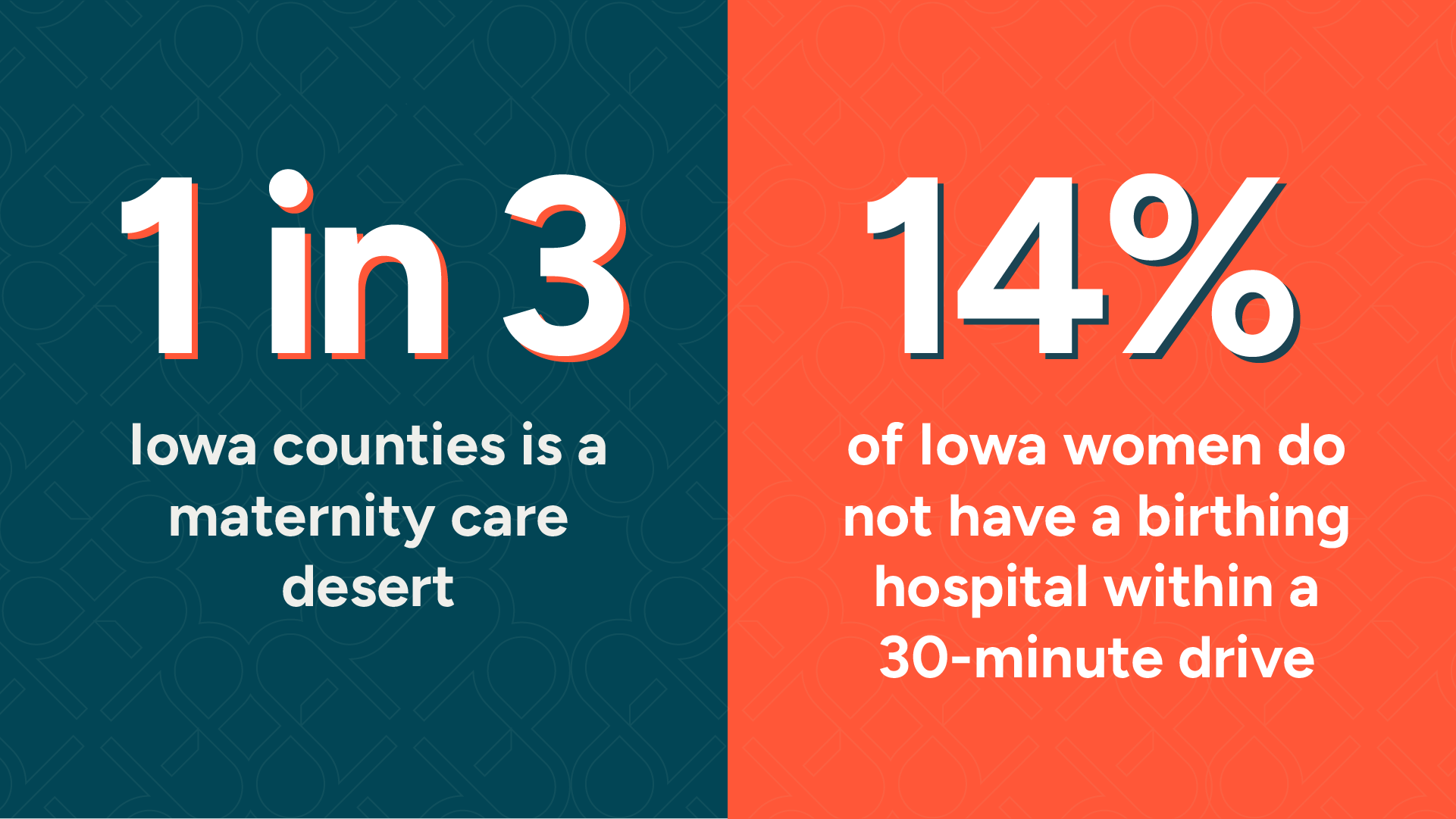
According to the March of Dimes, 33.3% of Iowa counties are classified as maternity care deserts, areas without a hospital or birth center offering obstetric care and without obstetric providers.
The data also shows that 14% of Iowa women do not have a birthing hospital within a 30-minute drive.

What Does This Mean for Iowa Families?
For families living in communities without local obstetric services, losing a labor and delivery unit can affect far more than where a baby is born.
Patients may have to travel farther for prenatal appointments and delivery. Longer distances can mean more time away from work, additional transportation expenses, childcare needs for other children, and greater challenges reaching a hospital during an emergency. Research specifically examining Iowa’s birthing unit closures found that the closures have the greatest impact on travel times for residents of micropolitan communities.

Iowa’s Healthcare Provider Shortage Adds Another Challenge
Access to healthcare requires more than a hospital building. It requires doctors, nurses, specialists, and other healthcare professionals who are available to provide care.
Iowa has faced persistent challenges recruiting and retaining healthcare professionals, particularly in rural communities. When hospitals cannot recruit enough providers to safely staff labor and delivery units, communities can lose local maternity services entirely.
Access Depends on Where You Live and What You Can Afford
The effects of reproductive healthcare restrictions are not experienced equally.
People with reliable transportation, flexible work schedules, childcare, and the financial resources to travel may have more options when care is unavailable locally.
For lower-income Iowans and people living in rural communities, those barriers can be significantly more difficult to overcome.
Research following the Dobbs decision has examined how the need to travel for abortion care can deepen existing economic disparities, particularly for people who already face financial barriers to healthcare. The same fundamental challenge appears throughout Iowa’s changing reproductive healthcare landscape:
When care moves farther away, access increasingly depends on whether someone has the time, transportation, money, and resources to reach it.
Two Years Later, What Do the Numbers Tell Us?
Abortion restrictions, maternity care deserts, hospital closures, and provider shortages are distinct issues with complex causes.
But for Iowans trying to access healthcare, their effects can overlap. A pregnant patient may live in a county without a birthing hospital. A family may have to travel an hour or more for appointments and delivery. Someone seeking abortion care may need to leave Iowa and find the money, transportation, childcare, and time away from work required to access care.
Two years after Iowa’s six-week abortion ban took effect, these numbers provide an important look at the changing state of reproductive and maternity healthcare access in Iowa.
Reproductive Healthcare Access in Iowa Is Changing
Abortion restrictions, maternity care deserts, hospital closures, provider shortages, and financial pressures on Iowa’s healthcare system are distinct issues with complex causes.
But for Iowans trying to access care, their effects can overlap.
A patient may live in a county without a birthing hospital. A family may have to travel farther for prenatal appointments and delivery. Someone seeking an abortion may need to leave the state and find money for transportation, lodging, childcare, and time away from work.
Two years after Iowa’s six-week abortion ban took effect, the numbers provide an opportunity to better understand the state of reproductive healthcare access across Iowa.
Fewer providers. Fewer birthing hospitals. Longer distances. Higher costs. This is the changing reality of reproductive healthcare access in Iowa.
Resources & Further Reading
- March of Dimes: Iowa Maternity Care Deserts
- Iowa State University: Iowa Birthing Hospitals Report
- Chartis: 2025 Rural Health State of the State
- NPR: Rural Hospitals and Labor & Delivery Care
- ICRF: One Year Later
- ICRF: Rural Iowa and Mailed Mifepristone Access
- ICRF: MercyOne Clinic Closures and Healthcare Access
For more reproductive rights information and updates on Iowa healthcare access, visit our resources page or sign up for our newsletter.
Empower change.
Sign up for our newsletter and stay informed on reproductive healthcare issues in Iowa.