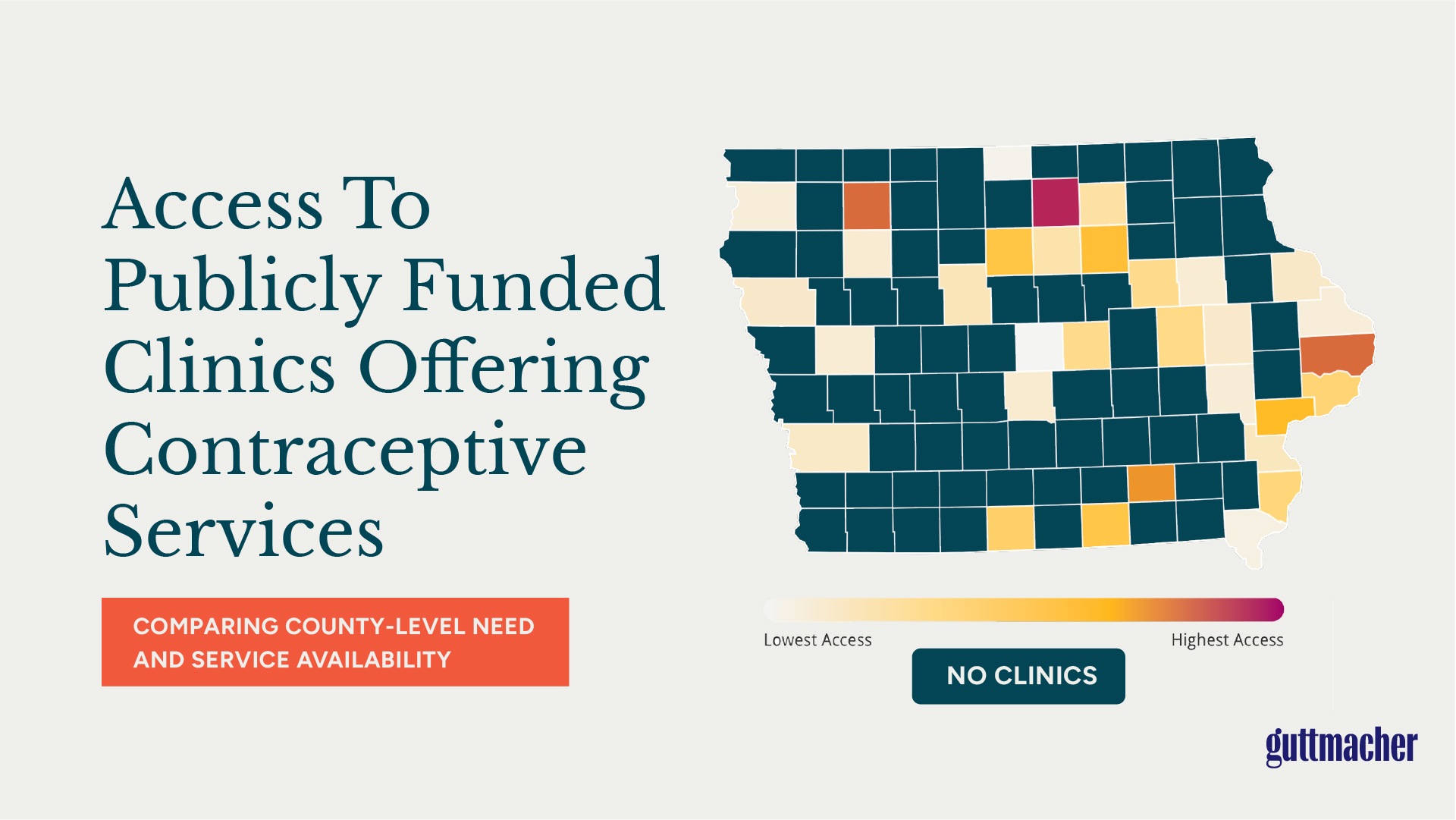
Access to maternity care is becoming increasingly difficult across Iowa.
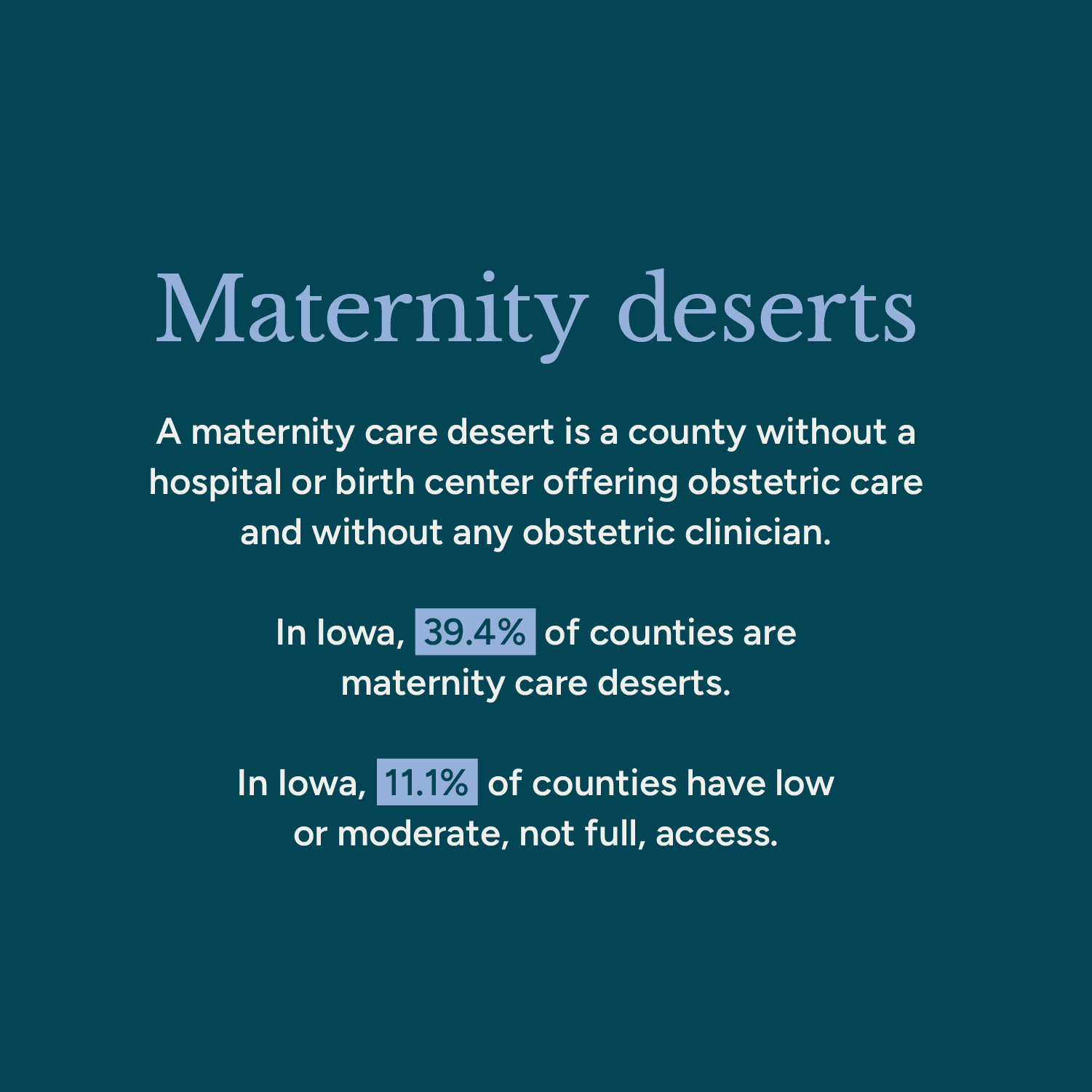
Today, 57% of Iowa counties have no local obstetric services, and 39.4% are classified as full maternity care deserts, meaning they have no birthing hospital and no practicing obstetric provider. As hospitals close labor and delivery units, healthcare providers leave rural communities, and access to reproductive healthcare becomes more limited, more Iowa families are traveling farther for prenatal care, childbirth, emergency pregnancy care, and postpartum services.
For many communities, access to care isn’t just becoming more difficult, it’s disappearing altogether.
What Is a Maternity Care Desert?
The terms “lack of obstetric services” and “maternity care desert” are often used interchangeably, but they measure different levels of access.
- 57% of Iowa counties have no obstetric services, meaning there is no local hospital providing labor and delivery care.
- 39.4% of Iowa counties are classified as maternity care deserts by the March of Dimes. These counties have:
- No hospital or birth center providing obstetric care
- No practicing OB-GYN
- No certified nurse midwife
In other words, maternity care deserts represent the most severe lack of local maternity care. These numbers paint a clear picture: where Iowa families live and where maternity care is available are becoming increasingly disconnected.

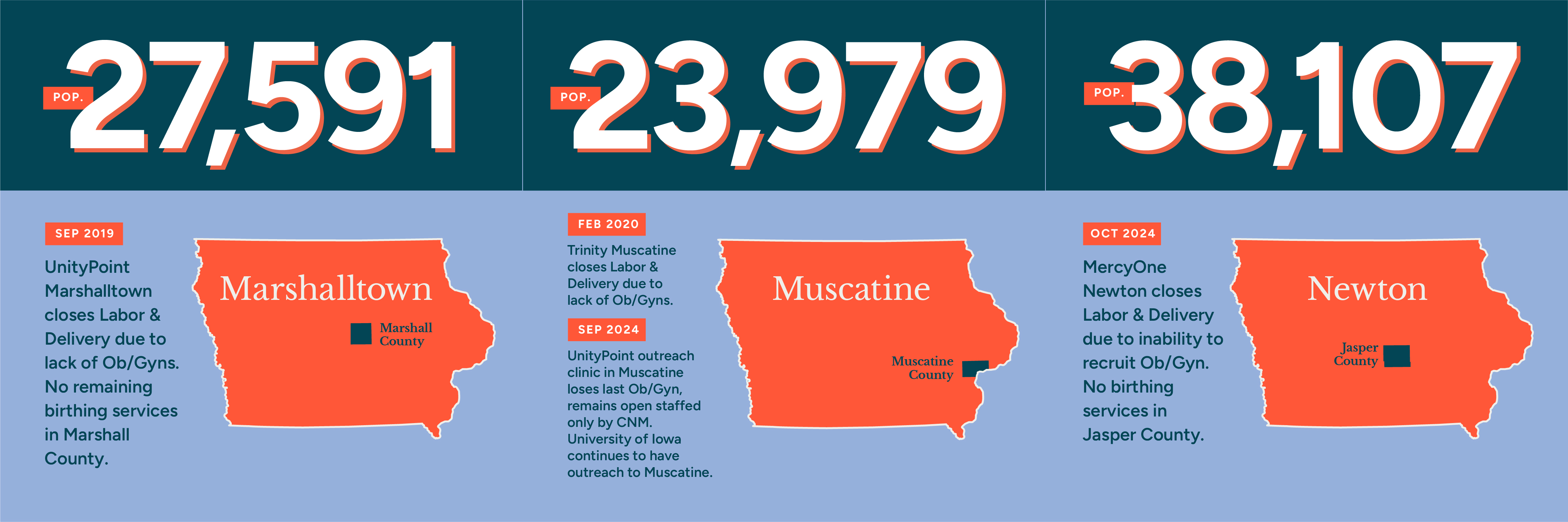
Since 2019, more than a dozen Iowa hospitals have shut down or stopped delivering babies. As a result, healthcare deserts have formed across the state, leaving thousands without safe, timely, local care.
Restrictions are driving doctors away
Iowa’s increasingly strict abortion laws are doing more than limiting patient care, they’re driving healthcare professionals out of the state.
In a powerful Des Moines Register op-ed from June 2025, a newly licensed physician shared her decision to leave Iowa, citing the state’s dangerous legal landscape for doctors:
“I will not work in a state where I could be jailed for saving a patient’s life.”
This doctor’s story isn’t unique. OB/GYNs across Iowa are choosing to:
- Leave the state for safer and more supportive environments
- Avoid practicing obstetrics altogether, fearing legal retaliation
- Turn down jobs in Iowa, leaving critical positions unfilled
According to the National Partnership report, legal restrictions on reproductive care are a leading reason OB/GYNs are avoiding rural practice. When laws put doctors at legal risk for providing standard care, including lifesaving abortion procedures. It’s no surprise they choose to work elsewhere.
This chilling effect is contributing directly to Iowa’s maternity care desert crisis. When we restrict care, we also restrict the workforce.
Rural families are facing impossible choices
Fewer OBs means more travel time. In some parts of the state, patients now drive over 90 minutes for a prenatal appointment or to deliver their baby. That delay can turn routine health needs into life-threatening emergencies.
In a state where:
- 14% of pregnant individuals don’t have a birthing hospital within 30 minutes
- And over 40 counties have no OB/GYN access at all
- The loss of care isn’t an inconvenience, it’s a crisis.

Reproductive Healthcare Is More Than Abortion
Reproductive healthcare includes:
- Prenatal care
- Labor and delivery
- Miscarriage management
- Postpartum care
- Fertility care
- Contraception
- Cancer screenings
- Annual wellness visits
As maternity care deserts continue to grow, access to all of these services becomes more difficult.
At the same time, Iowa has enacted additional restrictions affecting reproductive healthcare, including the state’s six-week abortion ban and new limits on medication abortion and telehealth care.
Healthcare organizations have expressed concern that increasing legal complexity, combined with existing workforce shortages, may make recruiting and retaining reproductive healthcare providers even more difficult.
Reproductive healthcare is more than pregnancy or abortion
Why This Matters
Maternity care is essential healthcare.
When communities lose obstetric providers or labor and delivery units, the effects extend beyond pregnancy. They affect families, local hospitals, workforce recruitment, emergency care, and the long-term health of entire communities.
As Iowa continues to face provider shortages and healthcare facility closures, improving access to maternity care remains a critical part of strengthening healthcare across the state.
The Bottom Line
Access to maternity care continues to shrink across Iowa.
Today:
- Iowa ranks last in OB/GYNs per capita
- 57% of Iowa counties have no obstetric services
- 39.4% are classified as full maternity care deserts
- More than 4,100 babies are born each year to families living in maternity care deserts
- 22.3% of births occur in rural Iowa, but only 9% of maternity providers practice there
- 14% of Iowa women do not have a birthing hospital within a 30-minute drive
- Over 68,000 women live in counties with no OB/GYN at all
- Reproductive care includes essential services for all ages not just pregnancy
- And Iowa’s own doctors are now leaving because of restrictive laws
These trends mean more Iowa families are traveling farther for care, facing fewer provider options, and navigating pregnancy in communities with increasingly limited healthcare resources.
Understanding where access is changing is an important step toward improving maternal health outcomes for families across Iowa. We cannot talk about healthcare access without addressing reproductive rights. It’s time to look past the headlines and recognize the economic and human cost of these policies.
Learn more
📚 OBGYN Power – Loss of Access in Iowa
🗞️ Des Moines Register: New Doctor Leaving Iowa (2025)
📊 GAO Report on Abortion Access & Economic Impact
For more reproductive rights information and updates on Iowa healthcare access, visit our resources page or sign up for our newsletter.
Empower change.
Sign up for our newsletter and stay informed on reproductive healthcare issues in Iowa.